
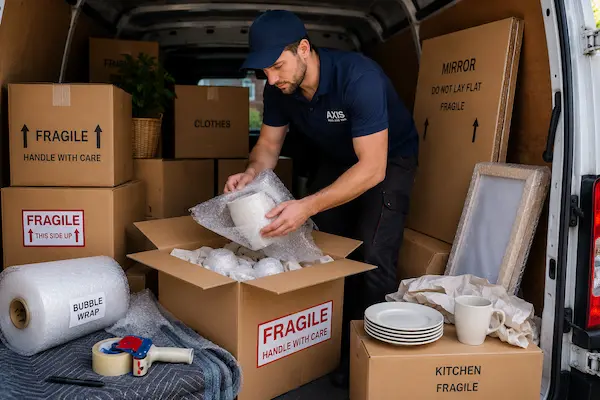
Moving home can be one of life’s most exciting milestones, but it also comes with challenges—especially when it comes to protecting delicate belongings. Fragile items such as glassware, mirrors, electronics, artwork, and sentimental keepsakes are particularly vulnerable during transportation. Without proper packing techniques, even a short journey can result in costly damage.
Whether you’re moving within London or relocating to Surrey, Kent, Berkshire, Hampshire, Essex, East Sussex, or West Sussex, understanding how to pack fragile items safely can save you time, money, and stress. At Axis Man and Van, we’ve helped countless homeowners and businesses move safely across the South East, and we’ve learned exactly what works when it comes to protecting valuable possessions.
Why Fragile Items Get Damaged During a Move
Many people assume items only break when a box is dropped. In reality, damage often occurs because items are packed incorrectly long before moving day.
Fragile belongings can be damaged by:
- Sudden impacts during loading and unloading
- Vibrations while travelling
- Boxes collapsing under excessive weight
- Poor-quality packing materials
- Empty spaces inside boxes that allow movement
- Incorrect stacking inside the moving vehicle
Understanding these risks is the first step towards preventing them.
Essential Packing Materials for Fragile Items
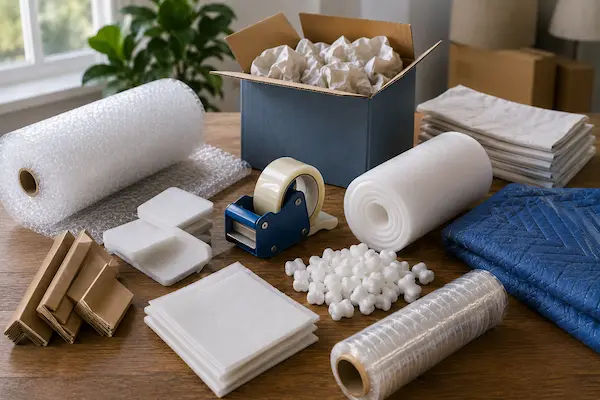
Before you start packing, make sure you have the right supplies available. Quality packing materials provide the protection needed to absorb shocks and prevent movement during transportation.
Professional movers typically use:
- Double-walled moving boxes
- Bubble wrap
- Packing paper
- Foam sheets
- Packing peanuts
- Heavy-duty packing tape
- Corner protectors
- Cell-divider boxes
- Stretch wrap
- Fragile warning labels
Investing in proper materials is significantly cheaper than replacing damaged possessions.
Step-by-Step Guide to Packing Fragile Items Safely
1. Select the Correct Box Size
One of the biggest mistakes people make is using oversized boxes. Large boxes often become too heavy and allow items to shift during transit.
Smaller boxes are usually better for fragile items because they:
- Prevent overloading
- Are easier to carry
- Reduce internal movement
- Lower the risk of crushing
For heavy but fragile items such as ceramics and kitchenware, small boxes provide the best protection.
2. Create a Protective Cushion Layer
Every box should begin with a cushioning layer at the bottom.
This protective base acts as a shock absorber and helps protect contents from impacts during transportation.
Suitable cushioning materials include:
- Crumpled packing paper
- Foam padding
- Bubble wrap
- Packing peanuts
Aim for at least two to four inches of protective padding at the bottom of each box.
3. Wrap Every Item Individually
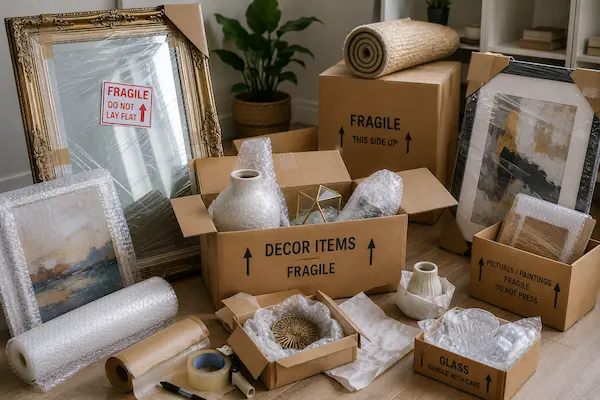
Never allow fragile items to touch each other directly.
Each item should be wrapped separately using packing paper or bubble wrap. This prevents friction and minimises the risk of cracks, chips, and scratches.
Particular attention should be given to:
- Handles
- Corners
- Thin edges
- Glass surfaces
- Decorative features
The more delicate the item, the more protection it requires.
How to Pack Glassware Correctly
Glassware is among the most frequently damaged household items during a move.
Wine glasses, tumblers, champagne flutes, and decorative glass pieces require careful handling throughout the packing process.
To pack glassware safely:
- Place packing paper inside the glass.
- Wrap each glass individually.
- Add a layer of bubble wrap around the outside.
- Pack glasses upright.
- Use divider boxes when possible.
- Fill empty spaces to prevent movement.
Never stack heavy items on top of glassware boxes.
How to Pack Plates and Dishes
Contrary to popular belief, plates should not be packed flat.
Professional movers recommend packing plates vertically because this reduces pressure and distributes weight more evenly during transportation.
For best results:
- Wrap each plate separately.
- Insert paper or foam between plates.
- Pack plates vertically like records.
- Cushion all sides of the box.
- Avoid overfilling the container.
This method dramatically reduces the likelihood of cracks and breakages.
How to Pack Mirrors and Picture Frames
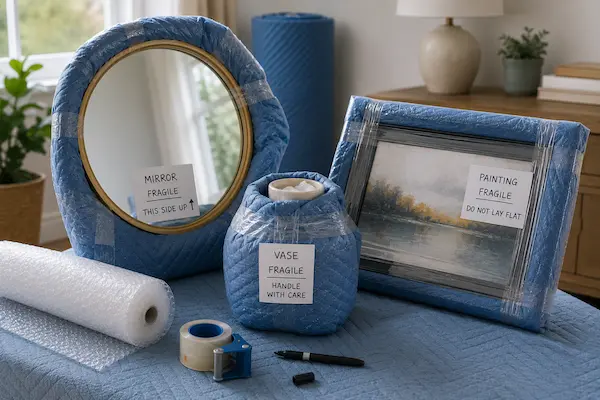
Mirrors and framed artwork require additional protection because glass surfaces are highly vulnerable to impact.
Start by applying painter’s tape across the glass in an X pattern. While this won’t prevent breakage, it can help minimise shattering if damage occurs.
Then:
- Protect corners with corner guards.
- Wrap the entire piece with bubble wrap.
- Use a dedicated mirror box.
- Keep the item upright during transport.
Large mirrors should never be laid flat inside a moving van.
How to Pack Electronics for Moving
Modern households contain thousands of pounds worth of electronic equipment.
Televisions, gaming consoles, monitors, computers, and speakers all require careful packing to avoid costly damage.
When packing electronics:
- Use original packaging whenever available.
- Remove batteries.
- Photograph cable setups.
- Protect screens with soft cloths.
- Keep accessories organised and labelled.
For large televisions, professional packing services are often the safest solution.
Common Packing Mistakes to Avoid
Even with good intentions, many people make mistakes that increase the risk of damage.
Avoid:
- Overfilling boxes
- Using damaged boxes
- Leaving empty spaces
- Packing fragile items with heavy objects
- Skipping protective padding
- Forgetting fragile labels
Small mistakes can lead to significant damage during transportation.
Typical Packing Costs for Fragile Items
The cost of protecting fragile belongings varies depending on the quantity of items and the level of service required.
| Service | Average Cost |
| Small Fragile Box Packing | £15–£25 |
| Medium Fragile Box Packing | £25–£40 |
| Large Fragile Box Packing | £40–£60 |
| Mirror Packing | £20–£50 |
| TV Packing | £30–£80 |
| Full Kitchen Packing | £100–£250 |
| Professional Packing Service | £35–£65 per hour |
| Full House Packing Service | £250–£1,200+ |
While professional packing involves an upfront investment, it often prevents expensive replacement costs later.
Why Choose Axis Man and Van?
At Axis Man and Van, we provide professional:
- Man and Van services
- House removals
- Office removals
- Furniture delivery
- Packing services
We proudly serve customers across London, Surrey, Kent, Berkshire, Hampshire, Essex, East Sussex, and West Sussex.
Our experienced movers understand how to protect fragile items properly, giving you peace of mind throughout your move.
Conclusion
Packing fragile items safely is one of the most important aspects of any successful move. By using quality materials, wrapping each item individually, filling empty spaces, and choosing the right boxes, you can significantly reduce the risk of damage.
Whether you’re moving a small flat in London or relocating a large family home elsewhere in the South East, taking the time to pack properly will help ensure your belongings arrive safely and securely.
If you’d prefer expert assistance, Axis Man and Van offers professional packing and removal services designed to protect your possessions from start to finish.
Frequently Asked Questions
What is the safest way to pack fragile items for moving?
The safest method is to wrap each item individually, use strong boxes, create cushioning layers, and fill all empty spaces to prevent movement.
Should plates be packed vertically or horizontally?
Plates should be packed vertically, as this reduces pressure and lowers the risk of cracking during transportation.
Is bubble wrap enough to protect fragile items?
Bubble wrap provides excellent protection, but it should be combined with sturdy boxes and additional cushioning materials for maximum safety.
How early should I start packing fragile items?
Most movers recommend starting two to three weeks before moving day to allow enough time for careful packing.
Do professional movers pack fragile items?
Yes. Axis Man and Van offers professional packing services to help protect delicate belongings during house moves, office relocations, and furniture deliveries.
How much does professional packing cost in London?
Professional packing services typically range from £35 to £65 per hour, depending on the complexity of the move and the number of items being packed.